Welcome to this week's journey into the mesmerizing world of art within art—a realm where paintings contain paintings, sculptures hide sculptures, and every masterpiece holds secrets waiting to be discovered by the attentive eye.
The Timeless Tradition of Nested Artistry
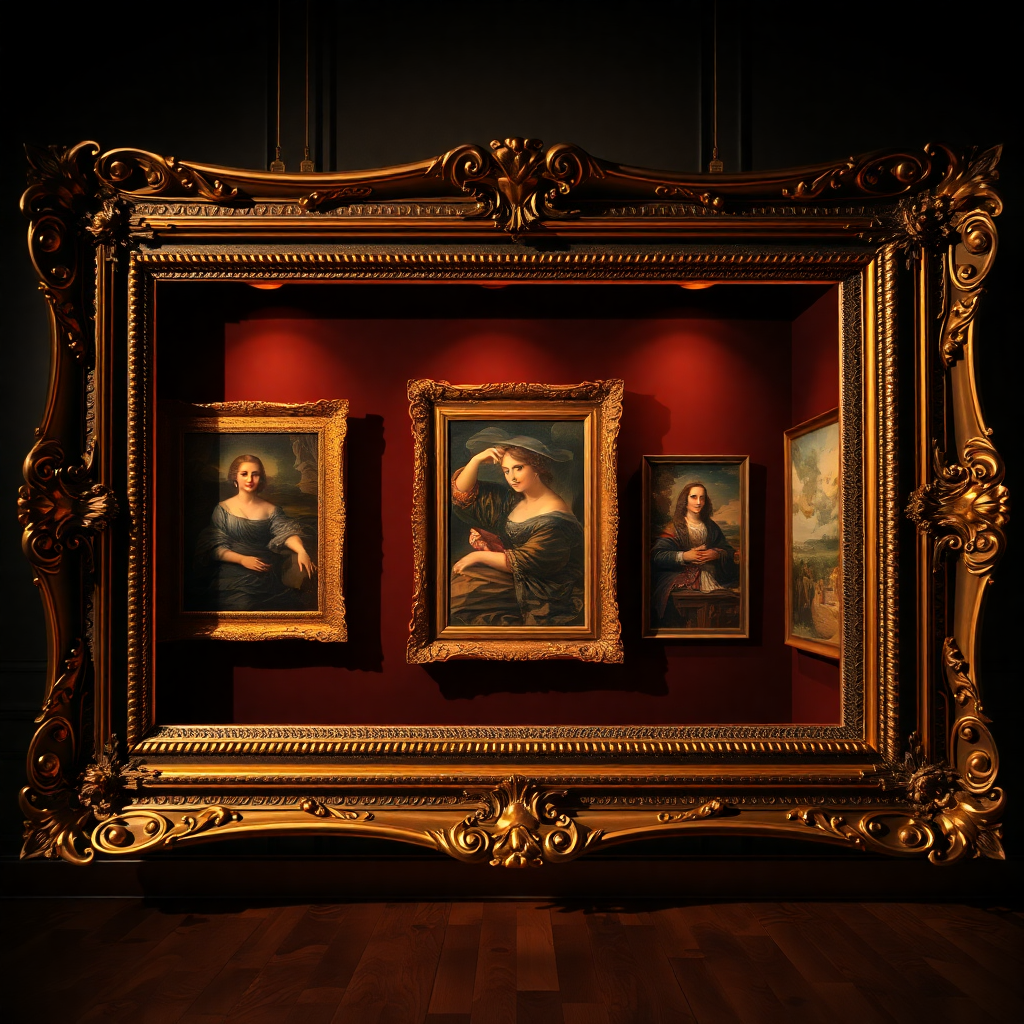
The concept of art within art is far from new. For centuries, master artists have embedded smaller works, hidden symbols, and visual Easter eggs within their larger compositions. This practice serves multiple purposes: it demonstrates technical virtuosity, adds layers of meaning for educated viewers, and creates a dialogue between different artistic moments within a single frame.
Consider the Dutch Golden Age, when painters like Jan van Eyck and Johannes Vermeer routinely included paintings on the walls of their depicted interiors. These weren't mere decorative elements—they were carefully chosen artworks that commented on the scene's narrative, added moral dimensions, or showcased the artist's knowledge of art history.
This Week's Featured Discoveries
1. The Mirror's Secret: Reflections as Canvas
One of the most sophisticated techniques for creating art within art involves the use of mirrors and reflective surfaces. In van Eyck's "Arnolfini Portrait" (1434), the convex mirror in the background doesn't just reflect the room—it contains an entire miniature painting in itself, complete with tiny scenes from the Passion of Christ painted around its frame, and the reflection of two additional figures (possibly including the artist himself) not visible in the main composition.
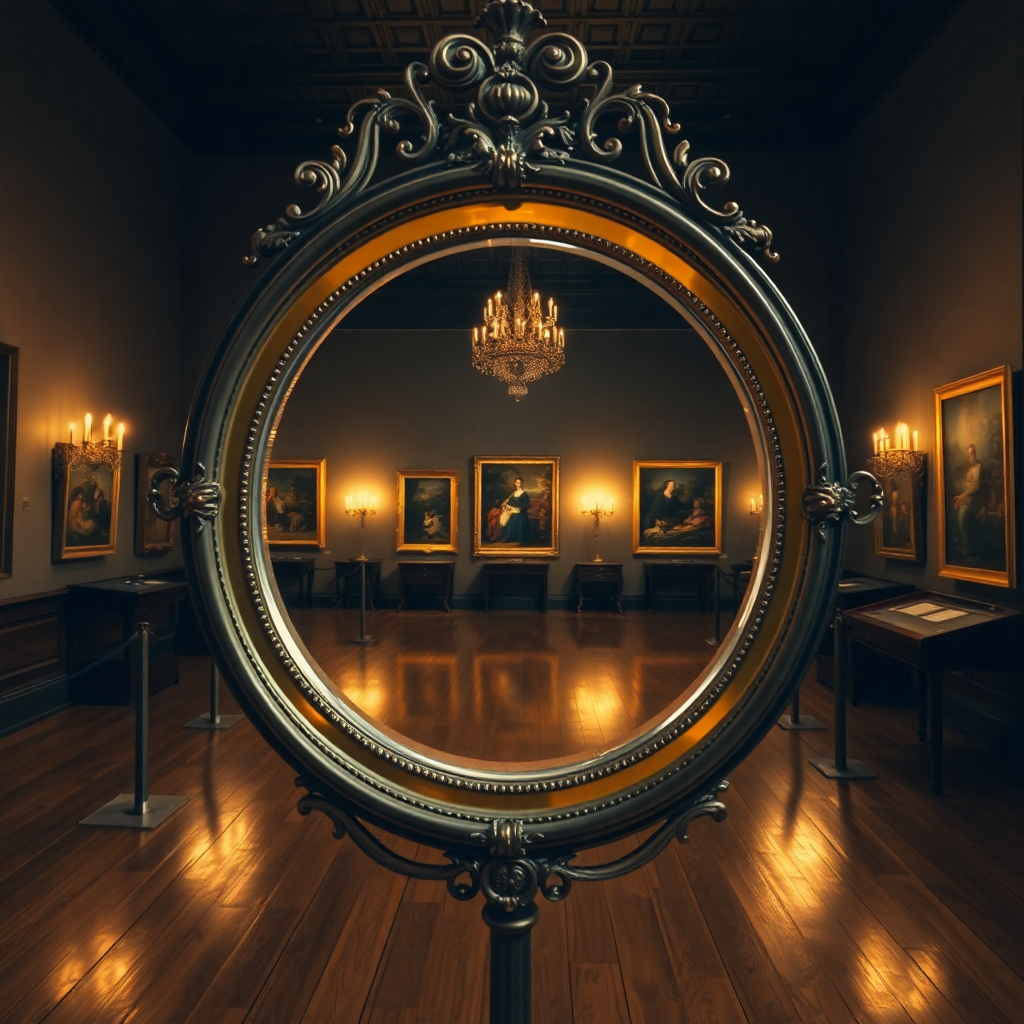
This week, contemporary artist Sarah Chen unveiled a modern interpretation of this technique. Her installation "Infinite Galleries" uses strategically placed mirrors to create endless recursive images of smaller artworks, each reflection slightly altering the color palette and perspective, creating what she calls "a conversation between infinite versions of the same artistic moment."
2. Digital Layers: The New Frontier
In our digital age, art within art has taken on revolutionary new dimensions. Digital artists can now embed entire galleries within a single image file, create NFTs that contain hidden layers revealed only through specific viewing technologies, and craft works that change based on when and how they're viewed.
This Week's Spotlight: Artist collective "Nested Visions" released a groundbreaking digital artwork that contains 1,000 individually crafted miniature paintings, each viewable only by zooming into specific areas of the main composition. The complete work, when experienced in its entirety, tells a non-linear story about the history of art itself.
3. Physical Depth: Sculptural Nesting
While painting naturally lends itself to the concept of art within art, sculptors have long explored this territory through techniques like relief carving, where three-dimensional figures emerge from surfaces that themselves depict scenes or patterns. Russian matryoshka dolls represent perhaps the most literal interpretation—each doll contains another, smaller doll, creating a physical manifestation of nested artistry.
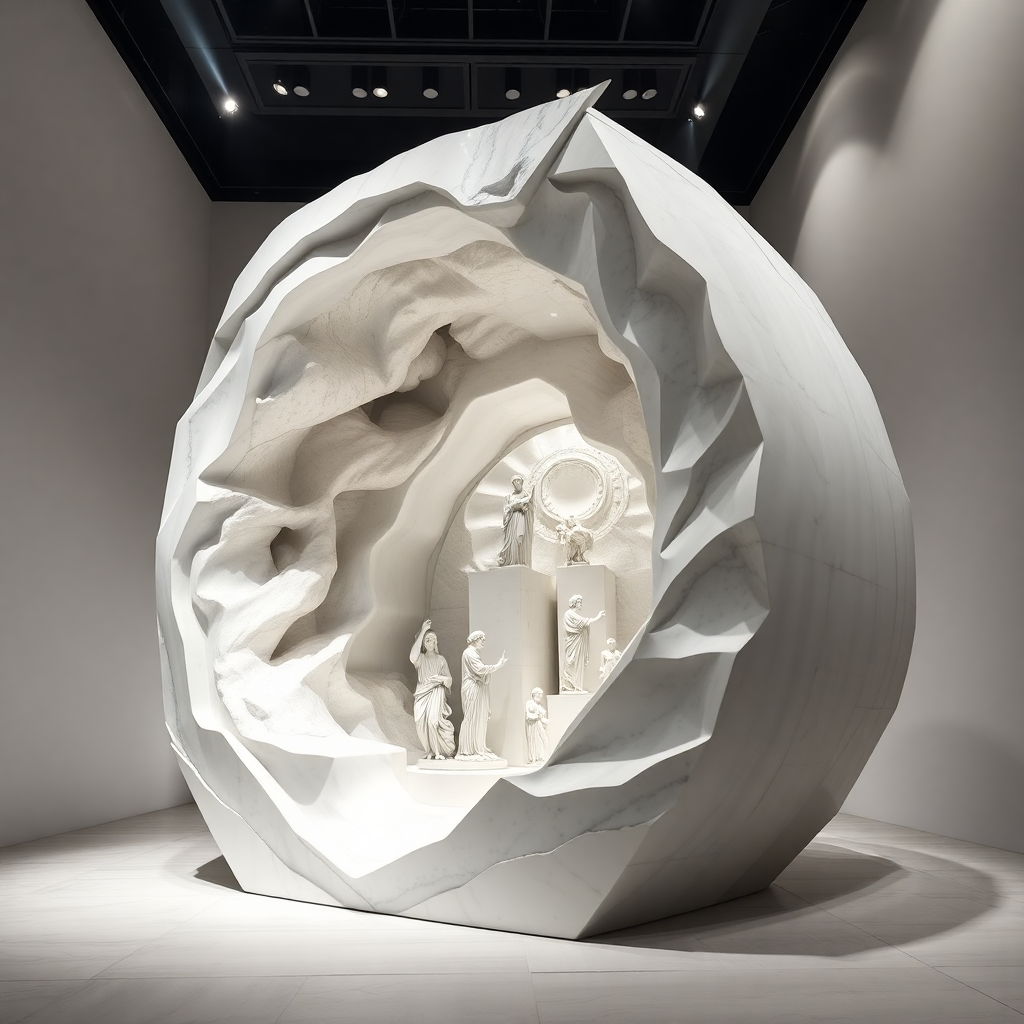
Sculptor Michael Torres made waves this week with his marble installation "Inception in Stone," where viewers can peer through carefully carved apertures to discover complete miniature sculptures hidden within the larger form. Using techniques refined over five years, Torres managed to carve independent, fully realized sculptures inside the hollowed chambers of his monumental piece, visible only from specific angles.
The Psychology of Discovery
Why does art within art captivate us so thoroughly? Psychologists suggest that the human brain is wired to seek patterns and discover hidden elements. When we find art embedded within art, we experience a cognitive reward—the pleasure of discovery combined with the appreciation of the artist's skill in concealing and revealing simultaneously.
"The act of discovering hidden art within a larger work transforms the passive viewer into an active participant in the creative process. You're no longer just looking at art; you're uncovering secrets, solving visual puzzles, and engaging in a dialogue with the artist across time and space." — Dr. Elena Rodriguez, Art Psychology Institute
This interactive quality makes art within art particularly relevant in our contemporary moment, where audiences increasingly expect engagement rather than passive consumption. The practice naturally creates what museums now strive for: multiple levels of access for different viewing experiences.
Techniques and Methods: A Brief Guide
For artists interested in exploring this approach, several established techniques offer entry points:
- The Gallery Wall Approach: Depicting interior spaces with artworks on the walls, allowing commentary through juxtaposition
- Reflection and Refraction: Using mirrors, water, glass, and other reflective surfaces to create embedded images
- Trompe-l'œil Layering: Creating illusions of torn paper, opened books, or revealed surfaces that show "hidden" artworks beneath
- Miniaturization: Incorporating fully realized tiny artworks as elements within larger compositions
- Digital Embedding: Using technology to hide layers, animations, or alternate versions within image files
- Physical Nesting: Creating sculptures, boxes, or frames that literally contain other artworks
Historical Context: Art History's Greatest Examples
The canon of art history is rich with examples of this practice. Diego Velázquez's "Las Meninas" (1656) features the artist himself painting a large canvas—but we can only see the back of it, leaving the "art within art" tantalizingly invisible. The painting also includes reflections in a mirror and artworks hanging on the studio wall, creating multiple nested layers of artistic reference.
In the 20th century, René Magritte explored this concept philosophically with works like "The Human Condition," where an easel holds a painting that perfectly aligns with the landscape behind it, questioning the nature of representation and reality. His famous "This is Not a Pipe" series similarly interrogates the relationship between art, representation, and the objects they depict.
Contemporary Applications and Future Directions
Today's artists are pushing the boundaries of art within art in unprecedented ways. Augmented reality applications allow physical paintings to come alive with hidden digital layers when viewed through smartphones. Generative AI art can contain "seeds" of other artworks, with algorithms trained on specific artistic styles embedded within the creation process itself.
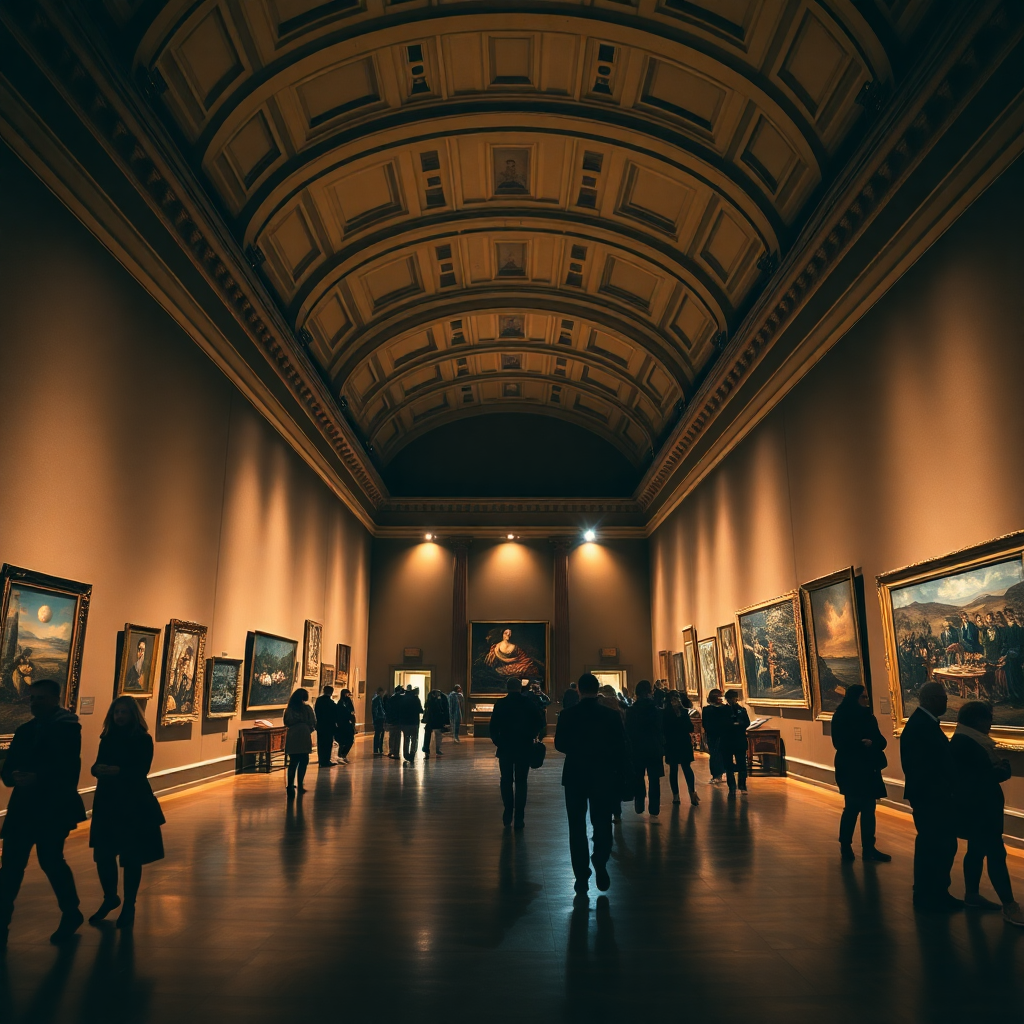
Exhibition Alert: The Metropolitan Museum of Art announces a new exhibition opening this month: "Infinite Regress: 500 Years of Art Within Art," tracing this practice from Renaissance panels to cutting-edge digital installations. The exhibition features interactive elements allowing visitors to discover hidden layers through various technologies.
Street art has also embraced this concept, with muralists creating works that incorporate photographed or painted reproductions of famous artworks, comments on art history, or hidden miniature pieces that reward careful observers. Banksy's appropriations of classical paintings into street contexts represent a postmodern take on the tradition.
The Viewer's Role: Active Engagement
Engaging with art within art requires a different viewing approach. Rather than taking in a composition at a glance, these works reward slow looking, careful observation, and multiple visits. They invite viewers to:
- Look beyond the obvious primary subject to explore background details
- Consider relationships between embedded artworks and the larger composition
- Research references and allusions that might not be immediately apparent
- Return to works multiple times, discovering new layers with each visit
- Use technology (zoom functions, special lighting, AR apps) when available to reveal hidden elements
This active engagement transforms the museum or gallery visit from a passive stroll into an investigation, turning every viewer into a detective of visual culture.
Looking Ahead
As we move further into the 21st century, the practice of art within art seems poised for explosive growth. Virtual reality galleries can contain infinite nested spaces, each room revealing new artworks within artworks. Blockchain technology enables verifiable provenance for hidden digital layers. Neural networks can embed artistic styles so deeply that every brushstroke contains echoes of art history.
Yet the fundamental appeal remains unchanged from van Eyck's time: the joy of discovery, the pleasure of recognizing an artist's skill and knowledge, and the satisfaction of uncovering